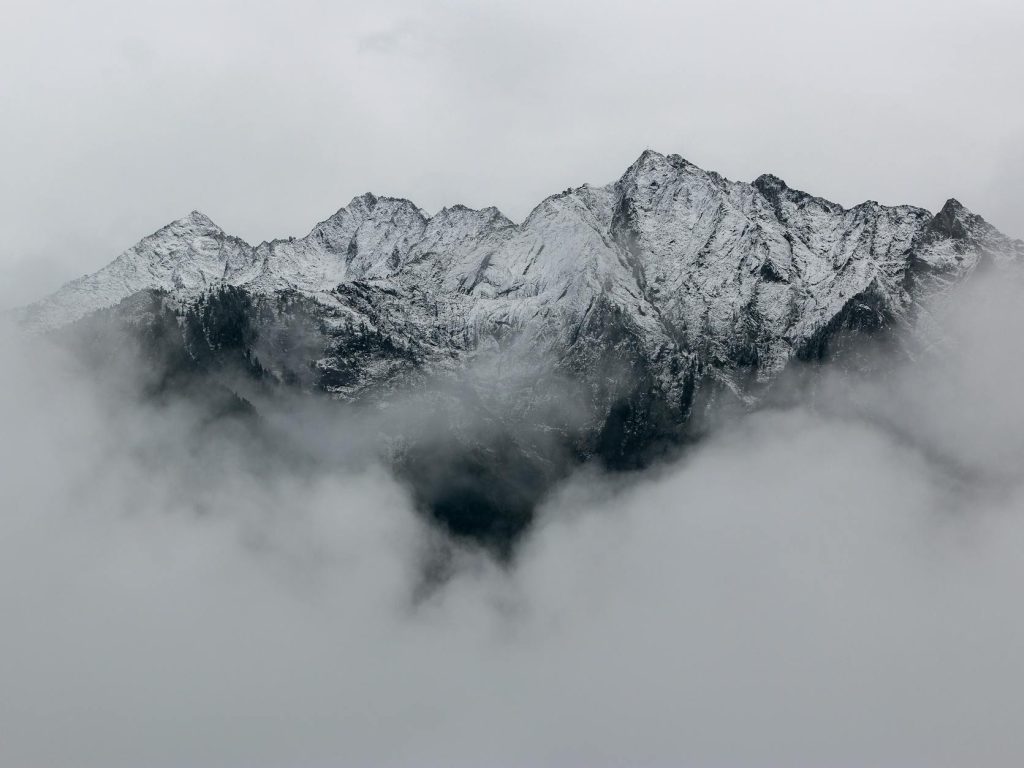
That night, we set up camp near the original site of the first team’s C1. High mountain nights are filled with bothersome sounds. The low pressure causes a ringing in the ears, and the extreme cold brings on headaches and discomfort. Outside, the fierce wind slams against the tent, producing a noise like sandpaper scraping. But the most terrifying thing is how, in such conditions, you start hearing phantom sounds—sometimes even seeing people who are no longer there, replaying scenes from the past right before your eyes. Most mountains above 5,000 meters have a kind of magic to them.
I’ve faced my own demons before—on Lhotse (the fourth-highest mountain on Earth), I kept seeing the mentor who taught me to climb. He’d died ten years earlier on K2 and never came back. Despite his warm, familiar smile and the stories he told, ones only he and I could know, I stayed rational. I knew he was gone, that this was just a projection of my mind. So when he asked me to follow him, I coldly refused.
Because of that experience, when I started hearing a woman’s intermittent crying that night, I didn’t think much of it. But what happened next defied explanation. The hallucinations I heard were all about Mita—stories I’d never heard before. It’s not unusual to hallucinate your own secrets, but hearing someone else’s? That was bizarre.
I shook Mita beside me and found him awake, his face pale with terror, drenched in cold sweat. I asked, ‘Mita, are you hearing the same thing? The whispers in the wind say you betrayed her. She was overjoyed to tell you she was pregnant, but you coldly said you didn’t want it.’ Mita turned to me, eyes wide with disbelief, a faint sound escaping his throat. Without a word, he nodded. ‘She also said, “Do you remember the promise you made by the fountain? Why did you stop wearing the cross pendant I gave you?” And she called you Taji—what does that mean?’
His pupils shrank, his breathing quickened. I could tell he was gripped by extreme fear. On a mountain, even a moment of panic can spell disaster, so I leapt out of my sleeping bag, sat on his chest to pin him down, and slapped him hard several times. Gradually, his breathing slowed, and he regained his composure.
We stared at each other for what felt like five full minutes before he finally spoke. ‘I’m sorry. There’s something I should’ve told you before we started this climb. Kiyoko was part of the missing team. She’s on this mountain too.’ I was stunned. I hadn’t seen Kiyoko’s name on the first team’s roster—unless she’d disguised herself as a man to join. But why?
‘Was that her voice just now?’ I asked.
Mita nodded. ‘Kiyoko wanted the baby, but I thought we were too young, with too much left to do. I made her get rid of it. Taji is what she called me when we were alone. She said a man should stand tall, so she nicknamed me Taji—a play on “tachi,” meaning to stand.’ [Editor’s note: Uncle Ishikawa explains that Mita’s full name is Takeshi Mita, and Kiyoko’s nickname Taji comes from the Japanese word “tachi,” to stand.] But Kiyoko should be dead. Mita and I fell into a wordless silence, both of us knowing this wasn’t a hallucination.
‘Can you get off me now?’ Mita finally said. I realized I was still sitting on him, so I gave an awkward laugh and moved to go back to sleep. But the moment I got off, we both froze at the sight before us. The wind had stopped at some point, and a bright moon hung in the night sky outside the tent. There, just beyond the tent’s entrance, stood a figure. Bathed in moonlight, its human silhouette cast a clear shadow onto our tent.
I wanted to ask if it was Chen or Wang, but Chen was over 180 cm tall, and Wang was stocky. This shadow—barely 160 cm—was far too small and delicate. The night was silent except for the pounding of our hearts. Was it alive? In a place like this, at a time like this, could it be alive? If not, what was it? We’d seen strange illusions all along, but this time, we both saw it.
We stayed frozen, too terrified to open the tent and look. It felt like an eternity, though it might’ve been mere moments—an endless torment either way. We prayed it wouldn’t come inside. Then, a piercing howl rang out. A ferocious wind surrounded the C1 camp from all directions, carrying wails, cries, rage, despair, and resentment, roaring at us again and again.
The gusts squeezed our tent, twisting it into grotesque shapes—hands clawing to drag us into another world, faces pressed against the fabric, contorted in agony. In all my years of climbing, I’d never been so afraid. Though I’m not religious, I begged silently, God, please don’t let them take me. Mita, clinging to me, recited the Hail Mary through sobs, pleading, ‘I’m not ready. Don’t take me now!’ We held each other, fighting to stay sane, until the wind finally died near dawn. The figure was gone. Still, we didn’t dare open the tent until sunlight bathed the camp around seven.
With trembling hands, we unzipped it, praying we wouldn’t see something otherworldly. Thankfully, nothing was there. Five meters away, Chen and Wang’s tent stood where it should. When we opened their door, they screamed as if they’d seen ghosts, only calming down when they saw it was us.”
 True TAIWAN Horror story
Leave a comment