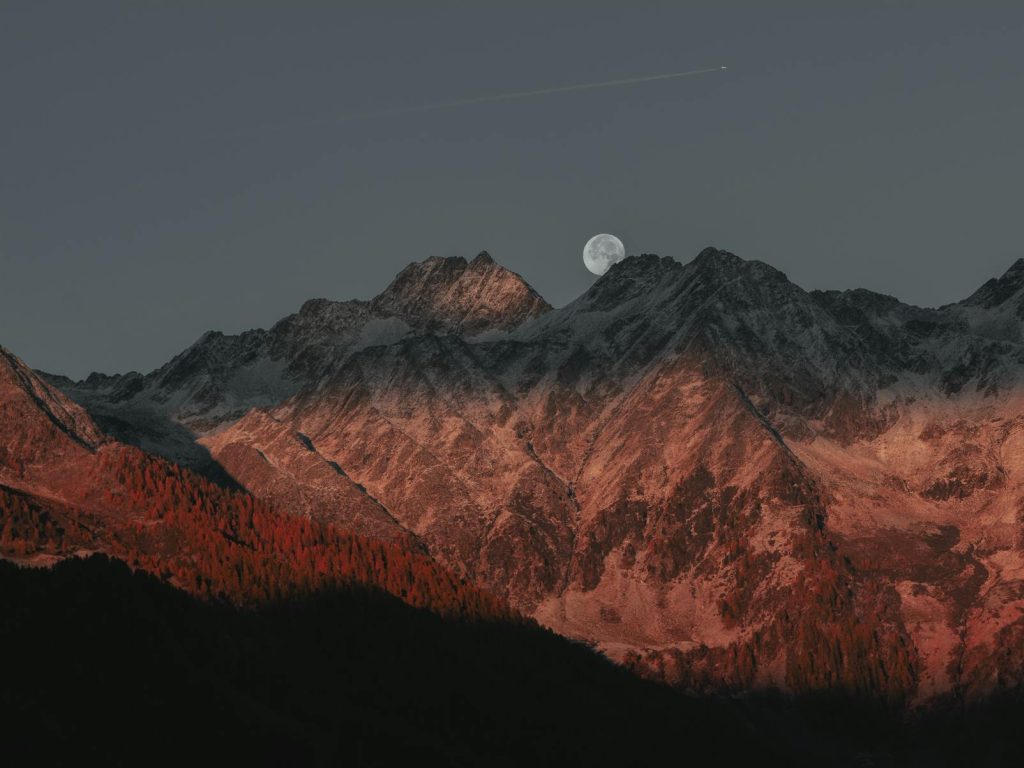
In Taiwan’s mountaineering community, Qilai Mountain is regarded as the most dangerous peak, topping the list for mountaineering accidents. For years, climbers have dubbed it “Black Qilai.” Despite being one of the regions in Taiwan with the highest number of mountain mishaps, its misty, unpredictable peaks are steeped in countless tales of supernatural occurrences. Even so, it continues to lure adventure-seeking climbers. Yet, the enigmatic “Black Qilai” remains shrouded in a veil of mystery to this day.
Taiwanese mountaineers commonly refer to it as “Black Qilai,” while the Japanese call it “Kirai,” meaning “the hated mountain.” However, some climbers interpret it as “Kirei,” or “the beautiful mountain.” Qilai is infamous for its three most bizarre mountaineering tragedies: the Tsinghua University Mountaineering Club Incident, the Chiu Kao Incident, and the Army Academy Incident. Among these, some of the victims have never been found, even now.. This chilling tale, originally shared by DonChi on PTT in 2013, recounts his real brush with Qilai’s eerie mystique. Buckle up—it’s long, spooky, and a little wild.
Four years prior, DonChi was a student at a Kaohsiung academy. A mountain-loving professor roped him and his buddy, Yu (a key player, remember him), into a climb. It was November, and without asking what, where, or how long, they agreed. Later, the prof revealed: a 5-day, heavy-pack trek up Qilai in late January during winter break, requiring a permit. To train, they hauled water buckets up stairs daily. When sign-ups lagged, the prof sweetened the deal—pass his class, guaranteed. Suddenly, plenty joined.
Gearless, DonChi raided his dad’s stash—25-year-old relics from his pre-birth climbing days: a yellowed pack, rigid snow gear, and a non-collapsible trekking pole (think grandpa’s cane). Modern packs have ergonomics; this one crushed his shoulders under 40+ kilos of food, tents, and cookware. They’d secured permits early, but a brutal cold snap hit that January—and only the day before departure did DonChi learn their target: Qilai, Taiwan’s mountain mishap magnet, Black Qilai.
Qilai’s got two shelters, Qilai 1 and 2, but no sane climber stays there. Weird stuff happens there: rescue teams stash bodies there when descents stall. Mountaineering taboos abound—don’t look back (you’ll trip), don’t stray alone, don’t tap shoulders and call names (spirits might answer), and never follow strangers (more on that soon).
Undeterred, DonChi, a naive kid marched on. The Climb Begins…
We entered Qilai from a mid-slope checkpoint, permit checked—16 of us plus a ridge caretaker. The crew: two teachers, a guide, me, Lao Yu, three random guys, and the rest girls. We arrived in the afternoon, found a flat clearing, and pitched tents. After the 88 Flood (happened in 2009), trails were wrecked, so the teachers briefed us on hazards and taboos as dusk fell. With winter and a cold front looming, it was freezing. We gathered branches, lit two campfires, cooked dinner, and prepped for an 8-hour climb the next day
The clearing was basketball-court-sized, ringed by grass taller than me. I shared a tent with Yu and Jimmy. Every tale needs a fatty—Jimmy’s ours. He joined for the deal to pass the class, asking us before sleep, “Anyone bring contact lens solution?” Nope. His 600-degree myopia left him blind when it dried out—no container either. We slept near the fire, three or four per tent, circling it. That moonless night, stars blazed but tents blocked them—pitch-black, my first taste of total darkness.
I couldn’t sleep—used to a bed, the sleeping bag sucked. Plus, Yu snored and hugged in his sleep. His snores were mild; I’d slap his face and roll him 90 degrees to hush him. If he flipped back, it’d start again. All night: slap, push, slap, push. Jimmy? Clueless—his lenses dried by morning, turning him into a mole.
Amid the darkness and face-slapping, I heard it—sasa sasa—in the grass, 5 meters away. Big, two-legged, circling for 15 minutes, now far, now near. My ears sharpened in the void. “Yu,” I whispered, “hear that?” “Please,” he groaned, “I’m awake—just breathing loud. Stop hitting me.” “Not that—something’s moving!” “Yeah, probably someone peeing,” he said. Relieved, I listened—it looped, closer, farther.
As sleep crept in, the grass-side flap yanked open. “Accompany me to the bathroom?” a woman begged. Half-asleep, I snapped, “Go yourself!” “Please?” she pressed. Yu snored. “No—tomorrow’s a full climb, it’s freezing, zip it up!” She left, flap open—I zipped it and passed out.
Breakfast was porridge. We discussed the route; everyone was fine except blind Jimmy. The guide chirped, “Great weather—sleep well?” Most cheered; Yu and I sulked.
Cleaning up, I griped, “Who woke me to pee? Annoying!”
Silence.
The teacher teased, “Need a buddy at your age?”
No reply.
“Next time, pair up—it’s dangerous.”
Still nothing.
“Yeah, crazy,” I muttered.
The guide’s face darkened. “Someone asked you?”
“Yep—ask Yu.” He nodded, munching.
The guide pulled me aside. “Grass noises, then she opened your tent?”
“Yeah, so?”
“No headlamp in that dark?” My back chilled. No light, yet that woman found and unzipped it?
He led me to the grass—10 meters beyond, a sheer cliff. If I’d followed “her,” I’d have dropped straight down. Shaken, we packed and moved on.
 True TAIWAN Horror story
Leave a comment