Breakfast time found the four of us sitting across from each other, silently sipping coffee. No one mentioned the events of last night, though we were all wrestling with the same question: should we descend and abandon this cursed mountain?
The first to speak was our leader, Chen Ming. ‘I know everyone wants to go down,’ he said, ‘but we’re only half a day from C2. If we leave now, we can be back by afternoon. I suggest we travel light, reach C2’s altitude, observe the C3 camp from there, and decide whether to press on. We’ve already missed the best window to descend the glacier, and the forecast predicts clear weather for the next few days. There’s no need to risk rushing down. Sitting here doing nothing won’t help—better to get to C2 and assess the situation. What do you think?’
His proposal made sense. Descending the glacier now wasn’t entirely safe, and while C1 had its unexplainable phenomena, it was a relatively secure spot by climbing standards. Going up to C2, though, stirred a shared unease—fear that the deeper we ventured into this mountain, the more inexplicable things we’d encounter, beyond mere high-altitude hallucinations. Still, Mita and I couldn’t argue with Chen’s logic.
‘If we turn back now without even reaching C2,’ I added, ‘it’ll be hard to justify to base camp, and the victims’ families won’t forgive us.’ As a rescue team, failing to bring survivors down was already a regret. To not push to the highest feasible point or recover bodies or belongings would shirk our duty. Returning empty-handed would invite scorn. So we left the main tent and cooking gear at C1, taking only basic equipment and rations.
After contacting base camp at 10 a.m., we began the ascent to C2. The journey was uneventful—no strange occurrences—but the four of us barely spoke, keeping silent unless necessary, as if afraid that any noise might alert whatever lurked on this mountain, summoning things not of this world. Deep down, I knew this was futile. Whatever was here already knew we were present. No amount of silence or hiding behind rocks would change that.
Yet, despite this unspoken understanding, we pressed on quietly, praying for no more oddities. Our nerves were stretched to the breaking point, and who knew when reason might snap? Thankfully, we reached C2 without incident.
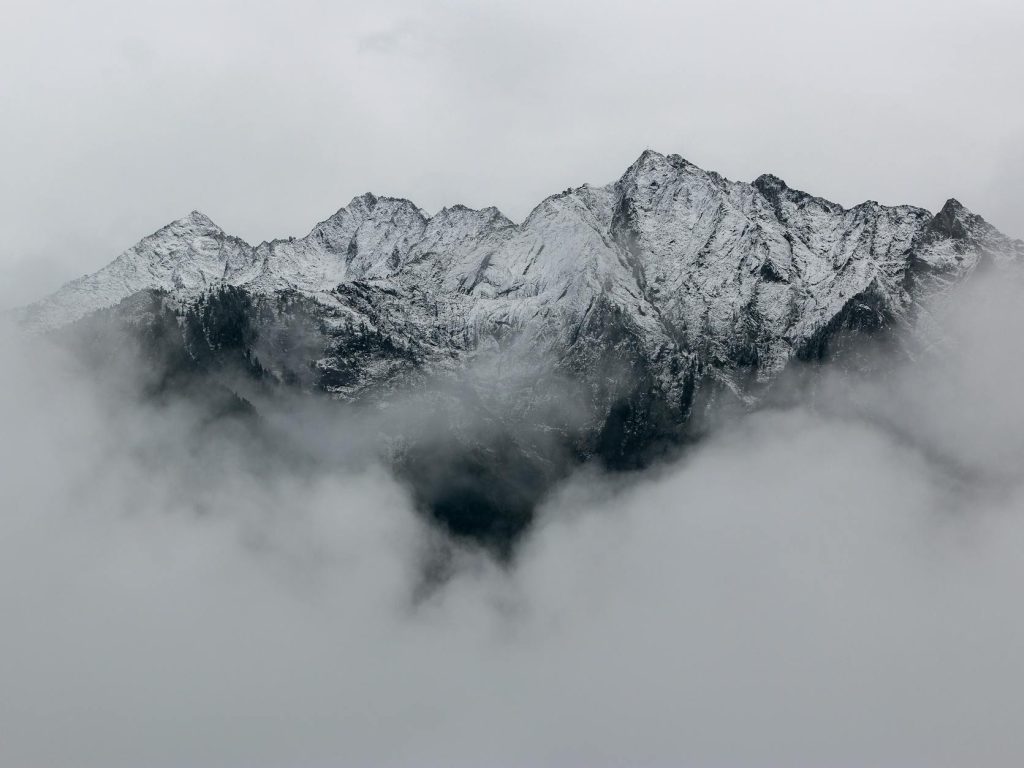
Or rather, where C2 was supposed to be. When we arrived, there was nothing but a vast expanse of white. Looking up toward the slope where C3 should have been, we saw the same—pure, untouched snow, devoid of any human trace. At that moment, we pieced together the fate of the first team. The Sino-Japanese joint expedition, camped at C3, had likely been hit by a massive avalanche in the dead of night. Seventeen people, asleep, had no chance to resist as disaster struck, burying them under heavy snow, perhaps never to see daylight again.
The four of us stood there, dumbfounded. This team included nearly ten veterans of 8,000-meter peaks—why had they set up C2 and C3 on such avalanche-prone slopes? No matter how skilled a climber, a sudden avalanche in sleep offers no hope of survival. Buried alive, unable to move, they’d have felt despair consume them as their heartbeats slowed, blood turned cold, and suffocation claimed them in the snow.
Death by avalanche is every peak challenger’s worst nightmare—a haunting specter that taunts the mind, ready to mock their fragility the moment they break. We scoured the area where C2 once stood, hoping to find remnants of the main tent, yet dreading we’d tug at a dead climber’s sleeve, too shaken to bear the shock. In that tense silence, we searched for clues. Then Wang Yi raised his hand—he’d found something. We gathered around and saw a corner of blue waterproof fabric poking from the snow, instantly reminiscent of a climber’s insulated jacket.
‘There shouldn’t be anyone at C2, right…?’ I muttered, almost to myself. The others didn’t respond. The briefing had placed all seventeen missing at C3, but after this mountain’s strangeness, even seasoned rescuers like us—some with experience carrying bodies down—felt an unfamiliar cowardice. We exchanged glances, finally settling our eyes on Chen Ming. He was the leader, after all. With a deep breath, he steeled himself, grabbed the fabric, and yanked.
It was a false alarm—just a shredded piece of the main tent. We all exhaled in relief. Digging further, we unearthed some cups, bowls, and a camera—owner unknown, film absent. (Honestly, even if there’d been film, I wouldn’t dare develop it, terrified of what might appear. That’s how much this mountain scared us.)
We also found a notebook belonging to someone named Sato, chronicling the days leading up to the disaster. To trace the summit team’s final movements, Chen Ming urged me to translate the diary into English and explain it to him.
 True TAIWAN Horror story
Leave a comment