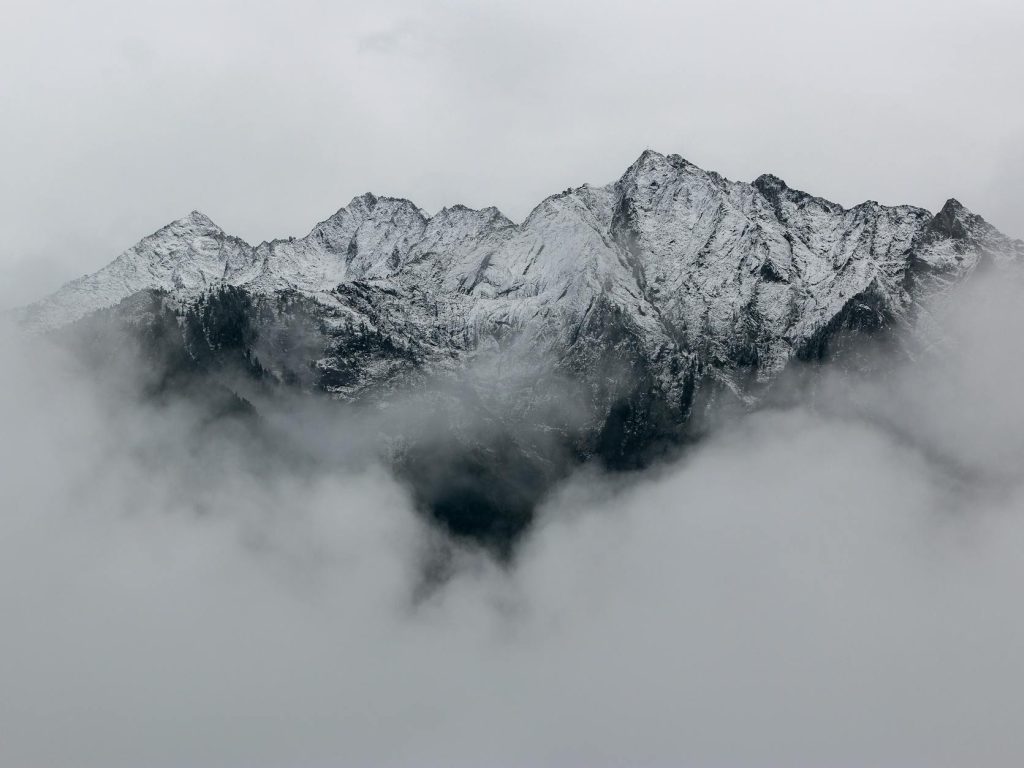
The diary’s contents are roughly as follows:
Mid-November
We arrived at a supply village at the mountain’s base. The locals, who rarely interact with outsiders, greeted us warmly. The young people were unfamiliar with Japan and found my portable cassette player fascinating.
Late November
The village elders were shocked by our climbing plans, insisting we mustn’t proceed. The M mountain range, they said, is the home of their gods, and K Peak, in particular, is the king of deities. Their people survive thanks to the mountain’s snowmelt and blessings—no outsiders should defile it.
Early December
Despite the villagers’ fierce opposition, we had official approval from the Chinese State Council. They tried blocking our convoy by lying in the road, but armed escorts quickly removed them. Defeated, they retreated to their temple, cursing our expedition’s safety. A shadow loomed over the team before we even set out. Song Jun, the Chinese leader, dismissed it, saying these were uneducated tribes clinging to superstition. China, he claimed, had moved beyond feudal beliefs into a modern order—this climb would prove it.
Early December
Though Song Jun preached materialism, we followed tradition, building a stone altar and offering ghee wine for safety, as we’d done in Nepal. The night before departure, many dreamed of gray wolves and white deer. Team member Zhang Jian called it a good omen.
Mid-December
We established base camp at 3,500 meters, surrounded by snow peaks on three sides and dense forest on the fourth. Avalanches rumbled constantly during preparations, hinting at unstable snow conditions. So far, everything’s gone smoothly.
Mid-December
Ma Chuanying, a Chinese team member of Tibetan descent, protested after discovering our teammate Kita Kiyoko had joined under the male alias Yamada Taro. Ma warned that K Peak’s goddess wife was jealous and that women had been forbidden from this mountain since ancient times. Song Jun reprimanded him for perpetuating superstition and wasting the Party’s training, after which Ma left the team and descended.
Mid-December
Camps 1 and 2 were built without issue, but tensions flared between the Chinese and Japanese sides. We accused their team of wandering outside after lights-out; they denied it, countering that our chatting during curfew was disruptive. Both leaders agreed to rein in their teams, though none of us admitted to nighttime talks. Even after the agreement, shadows moved near the Chinese camp at night. We chose to ignore it.
Late December
Disagreement arose over C3’s location. The Chinese suggested a spot away from the ridge to avoid avalanches, but we argued that’d place it too close to C2, rendering C3 pointless. We proposed raising C3 to a midpoint between C2 and the planned C4, near the ridge. Professor Kita sent our teammate Yoneda to scout and decide, but thick fog rolled in. Yoneda returned unable to judge. Professor Kita compromised, picking a spot between the proposals. Privately, Yoneda grumbled to me, suspecting the Chinese didn’t trust us—they’d sent someone to tail him in the fog, though he couldn’t identify the shadow.
Late December
Yesterday, a medium avalanche struck above C3, stopping 1,000 meters upslope. The Chinese reiterated their concerns, but Professor Kita argued that surviving it unscathed proved the site’s safety. With clear weather ahead, the summit team moves to C4 tomorrow for the push. Kita didn’t want to relocate C3 now and risk complications.
Late December
As part of the summit team, I reached 5,900 meters. We set C4 against a massive ice wall and scouted up to 6,200 meters, finding no impassable terrain. After reporting to C3 that we’d summit tomorrow, they banged pots in excitement, wishing us luck.
Late December
Led by Song Jun, we hit 6,400 meters—peak in sight—when the weather turned foul. Reluctantly, Song ordered a retreat to C3, promising future chances. But a blizzard hit, blinding us. We got lost, circling back to the same spot despite desperate attempts to descend. Trapped at C4, the cold sparked hallucinations—shadows outside, voices in our heads. Base camp kept us talking over the radio to stay lucid, but reception was poor, interrupted by a woman’s laughter and a baby’s cries. For the first time, I thought I’d die here. Around 10 p.m., the storm stopped. Moonlight bathed the snow in a ghastly glow, and we stumbled back to C3, bruised from minor falls, looking ragged but alive. I thanked the gods.
Early January
We held a small New Year’s celebration at C3, but several teammates, including Kita Kiyoko, showed altitude sickness—fevers, low spirits. Plans to retry the summit stalled due to ongoing snowstorms. Base camp relayed grim news: villagers were massing at the temple, complaining to the mountain god that if we summited, their descendants would abandon faith. Some cursed us to never return alive. Not a cheerful New Year’s update.
Early January
Snow keeps piling up, impossible to clear. Some teammates quietly want to descend. Kita Kiyoko, delirious with fever, mutters, ‘They’re coming, they’re coming, go home while there’s time,’ and other cryptic ramblings. Professor Kita is considering sending some back to base camp once the weather clears. Past 10 p.m., the radio crackled with interference. An eerie stillness settled outside, fog blanketing the camp. No moon tonight.
The diary ends here.
But the final pages bear frantic, scrawled notes:
‘I was wrong. We were wrong. Too late to descend. They’re here. Save me. Darkness closes in. Can’t escape. Save me. I don’t want to die. Save…’
Then nothing.
Why was this C3 diary in C2’s tent? Sato’s last entries—those chilling pleas—were written in twisted, barely legible script, some parts unreadable, others torn out. Mita silently tucked the notebook into his pack. No one commented. At this altitude, oxygen’s thin—experienced climbers losing their minds isn’t unheard of. Without all the inexplicable events we’d faced, we could’ve rationally explained the summit team’s fate. Now, the four of us just want off this mountain, no more questions.
 True TAIWAN Horror story
Leave a comment