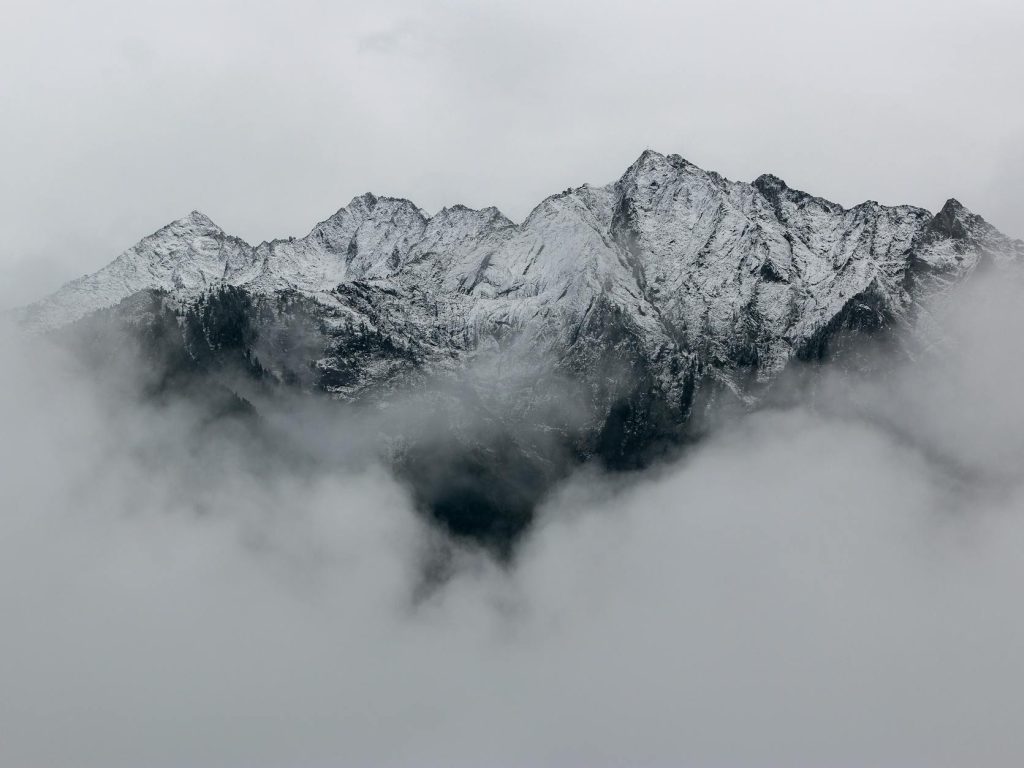
This is one of my favorite horror stories posted on PTT (the Taiwanese Reddit).
The 1991 Sino-Japanese joint mountaineering disaster on Kawagebo Peak remains the world’s second-largest mountaineering catastrophe, claiming 17 lives—6 Chinese and 11 Japanese. In 1987, Japan proposed climbing Kawagebo to China’s National Sports Commission. That August, the team, led by Japanese meteorologist Professor Jiro Inoue and Chinese mountaineer Song Zhiyi, arrived at the sacred mountain. From 1987 to 1990, they conducted geological, biological, and meteorological studies.
Their plans stirred local controversy due to Kawagebo’s sacred status, turning initial welcome into hostility. Despite disputes, the Chinese State Council approved the climb. The expedition began in winter 1990, with the Japanese team leaving Kobe on November 10, meeting the Chinese team on November 27, and starting the ascent in early December.
This event was something I heard about during my time studying abroad in Japan. One day, I went hiking up Mount Tsukuba with some friends. On our way down, we must have taken a wrong turn at a fork in the path and ended up wandering pretty far off course.
Luckily, we ran into a kindhearted older man. Not only did he guide us down the mountain, but he even treated us to some odon noddles afterward.
When he learned that one of my companions was a Chinese exchange student, this man—let’s call him Uncle Ishikawa for now—seemed to recall something deeply sorrowful, and tears welled up in his eyes.
After downing some sake at an izakaya, he began to tell us his story. It turned out that this day was the anniversary of his best friend’s death. Both he and his friend were passionate mountain lovers, but tragically, his friend had perished on a distant peak far from home. Now, every year on this day, Uncle Ishikawa would climb Mount Tsukuba near his home to commemorate him.
Normally, the story would’ve ended there, and that would’ve been fine. But my friend, being the tactless type, just had to ask how his friend died…
Well, that was a mistake. After hearing the full story, both my friend and I were so spooked that we couldn’t sleep that night. We ended up dragging ourselves to a karaoke place and singing until dawn. The next day, we stumbled back to our dorms, still shaken. For a whole week afterward, just thinking about that story gave me goosebumps all over…
From here on, I’ll narrate the story from a first-person perspective, as this man, Uncle Ishikawa, told it.
The story begins with a mountaineering disaster in the 1990s.
The incident took place on a certain Mount M, located within present-day China. It’s an incredibly remote area, considered a sacred mountain by the local ethnic groups since ancient times.
However, starting in the 19th century, a global mountaineering fever swept the world. One by one, the lonely, towering peaks were conquered—except for Mount M’s K Peak, one of the few remaining virgin summits above 6,000 meters. Several veteran climbers had previously attempted to reach its top and etch their names into history, but all had failed.
That year, Japan’s K University teamed up with a Chinese mountaineering group, forming a large expedition to tackle the summit. They had gotten tantalizingly close—just within sight of the top—when the weather suddenly turned treacherous, bringing heavy snow. The summit team had no choice but to abandon their attempt and descend to regroup with the others.
But in the span of a single night, the ground shook violently. More than a dozen members of the expedition vanished in an unexplained calamity, their fates unknown.
When news of the disaster reached Japan, it sent shockwaves through the nation. A rescue team was quickly assembled, drawing top mountaineers from all fields. Among them were me and my friend Mita—both of us had just returned from a harrowing, near-death ordeal on Kangchenjunga, where we’d been forced to abandon our summit bid.
By all accounts, Mita and I should’ve taken time to recover after getting back to Japan. But the leader of the stricken joint expedition, Mr. Kitai, had been Mita’s mentor during his time at K University. On top of that, Mita had a somewhat ambiguous romantic relationship with Kitai’s only daughter, Kiyoko. So, the moment we stepped off the plane back home, we didn’t even stop by our houses—we hopped straight onto another flight to China with the rescue team.
Unfortunately, the journey was long and remote, and it happened to coincide with the Lunar New Year period. Snow still clogged the roads, and by the time the rescue team finally reached the base camp, a full week had passed since the incident. In terms of rescue, it was almost certain the missing climbers had perished. Still, Mita clung to a sliver of hope, believing a miracle might happen.
Once we arrived at base camp, we quickly linked up with the Chinese rescue team. After a briefing, we split into groups, assigned routes, and waited for the weather to clear so we could head up the mountain.
Our team consisted of me, Mita, and two Chinese climbers, Chen Ming and Wang Yi. Both were seasoned veterans—Chen and Wang had recently completed a no-oxygen ascent of Everest.
After some discussion, we decided Chen Ming would lead our group, with Mita as the liaison. We planned to set out at 0300 the next morning, taking the R1 route along the U Glacier toward the missing team’s C2 camp.
To someone who doesn’t climb, it might seem odd—why set out at 3 a.m., when visibility is poor and everyone’s exhausted? Unless you’ve climbed a glacier yourself, it’s hard to grasp just how terrifying they can be. Unlike other parts of a mountain, glaciers are alive, constantly shifting and changing. You have to move with extreme caution, step by step. One misstep, and you could plummet into a crevasse dozens of feet deep. Even if you don’t die instantly, unless your teammates can pull you out fast, the freezing moisture will sap your body heat, and you’ll succumb to hypothermia.
If you’re lucky enough to slide down a flatter slope, you might get away with a sprained ankle or a broken bone. If you’re not, it could be a concussion—or instant death.
That’s why experienced climbers avoid lingering on glaciers. We choose early morning hours, when temperatures are lowest, because the ice moves slowest then and is at its most stable, minimizing the risk of accidents.
That night, we turned off the lights at 8 p.m. to rest up for the next day’s trek.
As usual, it’s hard to sleep well at high altitude. But since Mita and I had just come back from Kangchenjunga, we were in decent shape for base camp’s elevation and managed to catch some fitful sleep.
Then I had a strange dream. I saw a majestic, steep mountain—its blue slopes dusted with a thin layer of snow. And there, standing before me, was a white stag.
It wasn’t an ordinary stag. Its size was unreal—maybe as big as a North American grizzly bear, or even bigger. Its antlers shimmered with golden light, a glow I’d seen before. The most recent time was on Kangchenjunga, at dawn, when the first rays of sunlight hit the peak, bathing the summit in a radiant golden shine.
As I stared, transfixed, the stag fixed me with a regal, almost haughty gaze. I felt a pang of guilt and looked away. Maybe it was my imagination, but I could’ve sworn it sneered at me—a faint, mocking smirk—before turning and walking off slowly.
That’s when I noticed a silver-gray wolf trailing behind it. The wolf glared at me with raw fury, and a chill shot through me. My body froze, sweat beading on my skin, my limbs locked in place.
Then the wolf let out a roar—an indescribable sound, nothing like any wolf howl I’d ever heard. If I had to compare it, it was more like the deafening roar of a train, a truck, or a jet plane screaming past.
My gut sank. This is bad. I jolted awake, bolting out of the tent in my underwear, dragging Mita with me. He was still half-asleep, mumbling curses—“What the hell, you jerk?”—but he snapped awake soon after.
Veteran climbers dread that sound, especially in their sleep. If there’s such a thing as a “good death” or a “bad death” on a mountain, I’d put falling to your death or freezing from hypothermia in the “good” category. But being buried alive in an avalanche? That’s top three on my “bad death” list—especially if you’re smothered in your tent, sleeping bag and all. It’s the kind of nightmare that haunts climbers in the dead of night.
Sure enough, within ten seconds, Chen Ming and Wang Yi came barreling out of their tent, half-dressed. In the pitch-black night, the four of us dropped to our knees, praying in the languages our mothers taught us, begging the heavens not to let us die here tonight.
Deep down, though, we all knew the truth. For those who love the mountains, our ultimate fate is to rest in them forever. Climbers like Sir Edmund Hillary, who live out their days in peace, are the rarest of exceptions among us mountain fools.
Every year at mountaineering meetups, there are a few more new faces—and a few less familiar ones. Every so often, you hear about someone who’s been too badly injured to climb again, or someone who went off to some peak and never came back.
No matter how skilled you are, no matter how strong, if you keep challenging the mountains, one day they’ll claim you.
Thankfully, it wasn’t our time yet. After about thirty or forty seconds, the massive sound finally stopped.
Chen Ming grabbed a headlamp from the tent and scanned the area. About 300 meters from our base camp, a mid-sized avalanche had struck. It wasn’t huge, but we thanked the heavens it hadn’t come straight for our tents. If it had, I wouldn’t be sitting here telling this story.
After a scare like that, none of us could sleep. We stayed up until 2:30 a.m., prepping for departure. At 3:00 sharp, we set out for the U Glacier route.
As I mentioned earlier, climbing a glacier doesn’t demand the technical finesse of rock climbing or the stamina of an 8,000-meter peak, but it requires absolute focus. Even for seasoned climbers, a slip on a glacier can be just as deadly as a fall on a sheer cliff.
Because glaciers are always moving, you can hear the ice cracking beneath your feet. The shifting layers create a maze of deadly traps—constantly forming, collapsing, and reforming. It tests your judgment and, just as much, your luck.
A veteran climber once described glaciers like this: “A glacier is a giant roulette wheel. You might make it across today because you didn’t roll snake eyes. But your teammates might not be so lucky—and neither will you, forever.”
We moved in pairs, rotating every half hour. While the front two set up aluminum ladders, tested ice thickness, and plotted the route, the back two carried gear and rested.
Around 6:30 a.m., Mita and I took over the gear, letting Chen and Wang take the lead. That’s when the sun rose.
Golden light spilled from the east, parting the clouds that had shrouded K Peak for days. The blue mountain stood stark against the white snow, its summit gleaming gold. I couldn’t help but stop and marvel at it.
But then I noticed something strange. Even with the sunrise painting the distant peak in gold, everything around me seemed dim.
I rubbed my eyes. I hadn’t put on my sunglasses yet—on mountains, we wear them to shield against the glare off snow and ice—so my vision shouldn’t have been this dark. I called out to our leader, Chen Ming , signaling that something felt off and asking for a moment. I grabbed an oxygen canister from my pack and took a hit.
But Chen signaled back: the ice here was unstable, and we’d rest after moving forward a bit.
So I pressed on, growing more puzzled. Mita and I had just come back from Kangchenjunga; our altitude acclimatization should’ve been solid. Why was I getting vision issues below 6,000 meters? If it was oxygen deprivation, the canister should’ve helped, but the darkness lingered.
I stopped again, scanning my surroundings. Then I realized: the dimness was only within a 50-meter radius around me. Beyond that, everything was bright, as if something above me was blocking the sun.
Heart pounding faintly, I looked up. Nothing but clear blue sky. Ignoring it, I pushed forward another 100 meters—and the strange shadow moved with me, still centered on me.
I’d climbed plenty of high peaks and seen all sorts of weird phenomena, but this was a first. I decided to wait for Mita, at the back of the group, to catch up before saying anything.
Oddly, as soon as I thought that, the shadow lifted—like it had read my mind—and drifted toward the summit, vanishing.
When Mita caught up, I told him about the shadow. He looked baffled; he’d never seen anything like it either.
His explanation? “It’s probably just the angle—some ridge casting a shadow over here. As the sun moved, it shifted and faded away.”
I nodded along, saying, “Yeah, probably,” but inside, I wasn’t convinced. What ridge casts a perfectly circular shadow with no base? And as the sun rises, shadows creep downward toward the foothills, not up the mountain…
Still, after years in the mountains, you learn to shrug off the unexplainable. What caught my attention more was Mita—he looked like he wanted to say something but was holding back.
“Actually,” he finally said, “when I was setting up the ladder earlier, I saw something in the ice. I thought I’d imagined it, so I didn’t mention it. But now that I think about it, it’s creeping me out.”
“What’d you see? Don’t scare me like that,” I said, half-joking.
To be continued
Posted by er4488
Time stamp : Nov 2 14:44:59 2015
 True TAIWAN Horror story
Leave a comment