My friend’s geomanticer learning journey isn’t really anything special. Imagine the typical tortoise shell and coin divination, but swap the coins for dice—that’s pretty much it. But learning always has an order to it. When he first started learning the arrangement of the Eight Trigrams (Bagua), he began with Yin and Yang, then moved on to the Four Symbols (Sixiang).
Friend: “Simply put, it’s like turning the lower and upper trigrams into two eight-sided dice to play with.”
Me: “It’s that simple?!”
Friend: “If only things were as simple as an idiot like you thinks they are. (Me: Damn it!)
After learning the basic meanings, you take a single line (yao) and use the Four Symbols method to identify the changing line, then figure out the transformed line (yao) and the fixed line (yao).”
Me: “I did the math—each line has four possible changes. It feels like a single hexagram gets super complicated.”
Friend: “And what if you throw in the Celestial Stem and Terrestrial Branch, seasonal terms, and all that extra stuff?”
Me: “Holy crap, that’s a massive system.”
Friend: “Exactly. Fortune-telling is a discipline of statistical analysis and converging results. Got it?”
Me: “But I haven’t seen you use the Bagua to explain anything in ages. (|||゚д゚)”
Friend: “That’s because I stopped using Bagua for divination a long time ago. ( ′_ゝ`)”
According to my friend, what he ultimately learned was how to calculate a “situation”. But as he explains it, when he calculates one round, it contains 2x number of “situations.” Only one of them is real; the rest are all fake.
Me: “So the chance of you getting the real ‘situation’ from one round is ridiculously low. Doesn’t that mean you can explain it however you want?”
Friend: “Not quite. I have a method.”
Me: “What’s that?! (*゚д゚ノ )ノ”
After all, my friend’s fortune-telling is just a side skill, not his main gig, so his method has to tie into his geomancy (feng shui) work.
If one round has tons of possible interpretations, how does he figure out the true one and analyze it? I won’t go into too much detail here, but basically, his approach is to expand a “point” round into a “plane” round.
He turns one round into multiple rounds to narrow down the “true situation” he’s after. According to him, his teacher could even construct a “volume” round.
But that’s another story, so we’ll leave it aside for now.
His dice became pretty unique too. He’s got six-sided, eight-sided, nine-sided ones, and—get this—even three-sided dice.
I once jokingly asked if he had a two-sided dice. He gave me a look like I was an idiot and said: “Are you seriously asking that dumb question?”
…Sorry, my bad. Next time I’ll think before I speak.
Alright, let’s pull the story back on track.
As mentioned in the previous chapter, my friend ventured into the mainland mountains to confirm two spot for tombs.
This time, he brought along another feng shui master and his apprentice. According to my friend, they even knew some Taoist magic—holy crap, why?
Because this time, he was there to investigate two ominous points. Well, not exactly two, but more on that later.
After arranging things with the two old hunters locally, my friend picked a good day, and they set off. The group marched into the mountain region in a grand procession (is that the right phrase?). The journey went smoothly! They reached the abandoned tribal village without a hitch!
Me: “How come nothing happened?!”
Friend: “….”
But as mentioned before, they planned to camp there for the night and reach their destination the next morning.
My friend had only heard the hunters describe the scenery of the abandoned village before. Seeing it in person, though, was a different experience altogether.
Even though it was weathered and decayed, you could still feel the vibe of the tribe from back in the day.
The totem illuminated by the firelight at night gave him the creeps, though, which made him turn in early—something I found pretty hilarious.
The next morning, for some reason, he woke up with a sudden urge to do a divination round.
He doesn’t usually do readings—when he’s set on doing something, he just does it, so why bother divining?
But that gut feeling at that moment wasn’t something he could ignore. The result he got left him dumbfounded. The first round’s base situation came up all ominous.
To put it in perspective, one round contains 2x number of “situations.” For all of them to be ominous—what kind of odds are that? Even ominous situations vary in scale: small, medium, large, or a “dead end.”
So, after pinpointing the “true situation,” he immediately went to discuss it with the feng shui master.
The master was startled to hear that every situation was ominous. However, he pointed out that they were there to investigate ominous points in the first place.
It wasn’t exactly a “good fortune” trip to begin with, but he asked if there was a way to resolve it.
Indeed, an ominous situation is ominous, but it’s not necessarily unresolvable.
The solution? Bring along someone with a water element in their fate, and they’d face danger but come out unscathed.
And that person turned out to be none other than the young apprentice.
Me: “Wait, wait, wait…”
Friend: “Hmm?”
Me: “You’re not saying that for the rest of the trip, you made that apprentice…”
Friend: “When there’s work, the disciple steps up. What’s the problem? (・∀・)?
…Fine….
Advertisements
The group finally reached the location of the points they were investigating. As mentioned earlier, the two ominous points weren’t at two separate locations. They were a pair of twin ominous points.
Me: “What’s with this tongue-twister phrasing?”
Friend: “As long as everyone gets it, it’s fine, now shut up.”
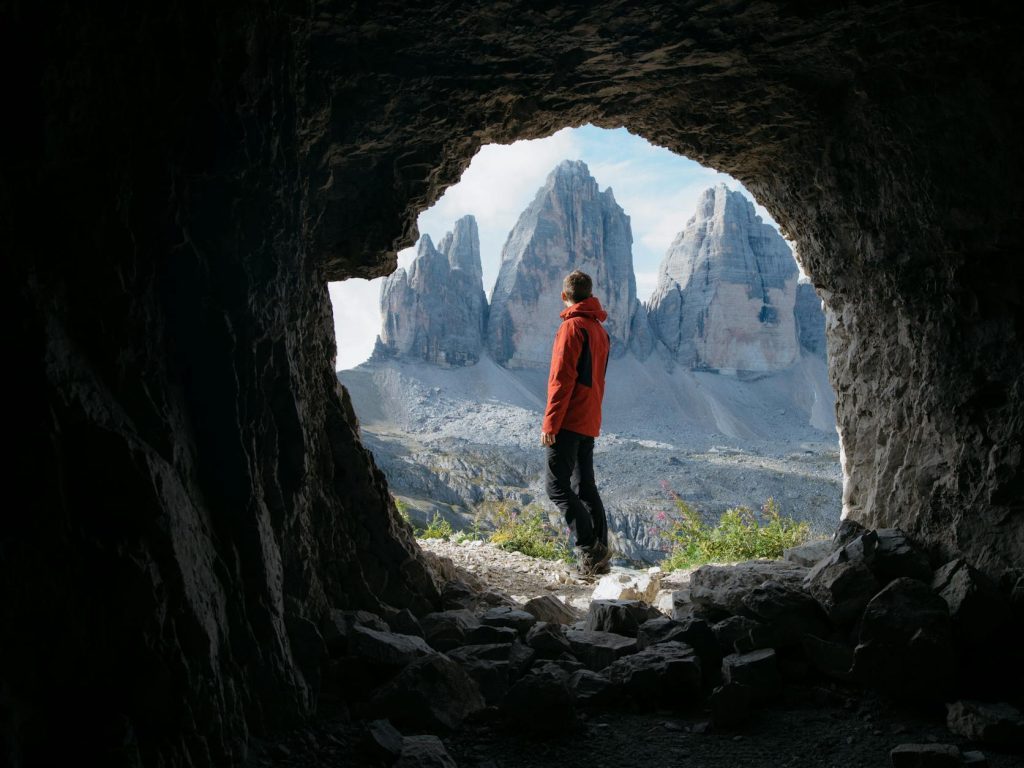
But upon arrival, you couldn’t help but marvel at nature’s craftsmanship. A massive natural sinkhole stood before them. Surprisingly, it wasn’t as dark as you’d expect—sunlight actually filtered in. Stepping inside, they realized why: at the top of the arched ceiling of this giant sinkhole was another eroded opening, letting sunlight pour through.
Directly beneath this hole was a large pool of water—a really big one. It looked like rainwater had collected here through the opening above during storms, resembling a shallow version of Taiwan’s Jiaming Lake.
But according to my friend, this wasn’t good.
The water wasn’t flowing. Though it was beautiful, it was bad feng shui. The two “eyes” of this ominous point were at opposite ends of the pool, beyond the reach of the sunlight. At that moment, the feng shui master spoke up.
“This is already complete.”

 True TAIWAN Horror story
Leave a comment