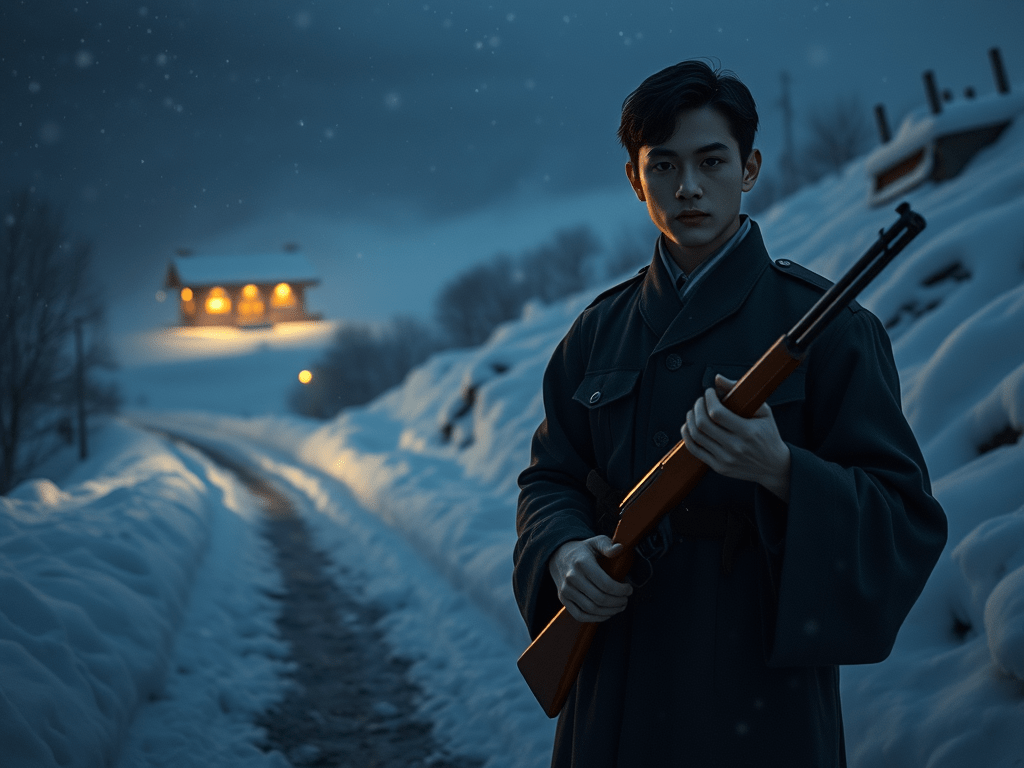
One of the largest mountain disasters in modern history is the “Hakkoda Mountains Snow March Incident” that occurred in January of Meiji 35 (1902). The event spawned ghost stories that linger to this day—taxi drivers still report glimpsing soldiers in Meiji-era uniforms haunting their back seats at night.
Two captains led the ill-fated marches: Captain Fukushima Taizo of the Hirosaki 31st Regiment (the “Hirosaki Team”) and Captain Kaminari Bunyoshi of the Aomori 5th Regiment (the “Aomori Team”). Both rose from commoner backgrounds through the army’s non-commissioned officer system, not military academies. Fukushima, 35, earned praise for his competence, while Kaminari, at 32, climbed ranks unusually fast due to his skill.
Yet their approaches differed sharply. Fukushima had scouted the route the previous summer and studied winter tactics, like Russian cold-weather survival and local chili-powder remedies. He arranged for village support along the way. Kaminari, however, stepped in last-minute after another commander took leave. His superior, Major Yamaguchi, 46, insisted on joining as an observer despite health concerns, creating a messy dual-command structure.
Fukushima’s Hirosaki Team was a small, elite group of officers and non-commissioned officers, split into pairs for tasks like weather observation and mapping, with added rest time. Kaminari’s Aomori Team was a chaotic mix of 210 soldiers from multiple companies, including a sick captain who joined despite medical advice. (Ironically, this Captain Kuraishi Hajime, from snowy Yonezawa, survived and saved others.
Fukushima prepared meticulously—straw boots with chili powder, hemp ropes to stay linked, and local guides. The Aomori Team, expecting a hot spring stop, skimped on gear. With vague orders to “bring whatever,” most soldiers brought little; one survived thanks to chili powder, another due to rare rubber boots. Their rice-ball rations and sleds worked in practice but failed in the blizzard.
Hakkoda’s Deadly March: A Blizzard of Doom
Here’s how it unfolded for the Aomori and Hirosaki Teams on January 23rd, a day that foreshadowed tragedy.
At 6:55 AM, the Aomori Team set out from their 5th Regiment headquarters in Aomori (snow: 87mm, -6.5°C). Meanwhile, the Hirosaki Team trudged along Lake Towada’s cliffs, their steps a mere 25cm due to tough terrain. Captain Fukushima wisely had boats shadow their route for safety. After leaving the lake, they crossed the 560m-high Ogura Mountain (snow: 2.5m, -7°C).
That same day, a low-pressure system from southern Honshu moved north, triggering a massive cold front across Aomori and Hokkaido. A local guide warned Fukushima, “Tomorrow is the Mountain God’s Day”—a folk belief that the 12th day of the lunar month (January 24th) was unfit for mountain travel. Fukushima took note.
At noon, the Aomori Team reached Tamogino, where villagers gave the same warning and urged them to hire guides. Major Yamaguchi dismissed it as a money grab, a decision later rued. (After the disaster, a January 29th To-o Nippo report quoted villagers: “The Tadeshiro area is deadly in winter, especially with heavy, unstable snow that year. When the team didn’t return, we knew they were likely all frozen.”)
The Aomori Team’s sled unit slowed them down, despite Captain Kaminari boosting manpower from 4 to 12. At lunch, their rice balls had frozen solid—some chipped at them with bayonets, others tossed them aside. The team doctor warned of frostbite and begged to turn back, but Yamaguchi, eyeing the 10km left to Tashiro Shinyu, pressed on.
Afternoon: Trapped in a Blizzard
By 4:10 PM, the Aomori Team reached Umanoseba, the highest point of the Hakkoda range, just 3km downhill from their goal. But the sled team lagged 2km behind. Headquarters sent 88 men to help, while 15 others pushed ahead to secure camp. The sleds rejoined by 5:00 PM, but sunset came early in the high latitude, halting progress. The team was stuck in Narusawa—a treacherous spot where getting lost meant vanishing in the forest or tumbling into a ravine. (Narusawa’s name comes from the snapping of branches in fierce winds, like the mountain itself groaning.)
A blizzard hit, slashing visibility. The advance party faced chest-deep snow and sinking sleds. Yamaguchi ordered the sleds abandoned, with soldiers carrying the rice, coal, and gear—a crushing load. Worse, the lead group, lacking guides, circled back behind the sled team in the blinding storm, disoriented by stinging winds that forced them to turn their faces side to side.
At 8:05 PM, Lieutenant Mizuno’s three-man scout returned, reporting no path ahead. By 8:15 PM, Yamaguchi gave up: they’d camp in the snow, a fateful call as the storm raged on.
While Fukushima’s preparation kept the Hirosaki Team steady, the Aomori Team’s hubris—ignoring warnings, rejecting guides, and underestimating the cold—trapped them in a frozen nightmare. The Mountain God’s Day loomed, and with it, disaster. Stay tuned for the chilling conclusion!
 True TAIWAN Horror story
Leave a comment