This is it—the last chapter of my Third Company saga, and hands down the scariest thing I’ve ever lived through. Everything I’ve shared so far—the glowing house, Betel Nut Brother’s haunting, the urn under the oil depot—pales next to this.
Back when I mentioned the other incidents earlier, that felt like a campfire tale compared to what’s coming. Truth is, I hate revisiting this. As a kid, I was fearless—dumb, even. Ghostly shrine tablets dancing in a haunted house? Been there. Nothing fazed me—until this. It flipped my whole worldview. Now, I respect the unknown, and I’m fine not understanding it. Sometimes, ignorance is a blessing.
It started with a handover task. Our camp was slated for decommissioning, and we had to pass everything—gear, maps, the works—to the next unit. One map mattered most: the strategic deployment chart, detailing nearby bunkers and strongholds.
Why the fuss? We’d left out the back mountain tunnels and their bunkers. With a month until shutdown, our company brigadier demanded we survey them—measure every inch—and he’d check our work himself.
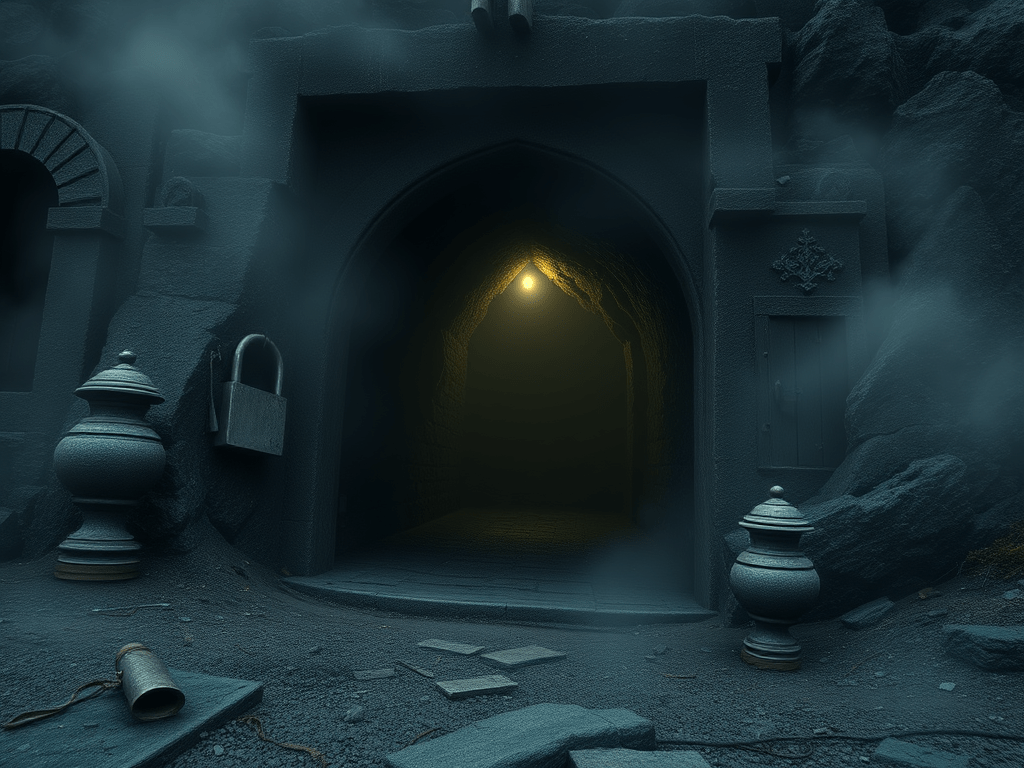
What tunnels, you ask? The Tiger Leap Tunnels.
The tunnel built by the Japanese, with countless workers dying during construction.
The tunnel sealed in blood—laborers executed to keep it secret.
The tunnel blown up by loyalists suiciding for the Emperor at war’s end, more deaths uncounted.
The tunnel carved into a mountain of over 10,000 graves—a chaotic burial sprawl.
The tunnel which rumored to hide Japanese gold.
The tunnel locked with a dozen padlocks, plastered with hundreds of charms, and lined with over a hundred ash urns—many unclaimed—inside and out.
The tunnel featured on at least four paranormal shows, some crews carried out on stretchers.
The tunnel historical records say 40+ kilometers of truck-wide passages, 30+ tunnels total, but a home to bats swarming out and snake eggs littering the floor.
I’m getting goosebumps just typing this.
So, the brigadier in Third Company half-assed it at first—sent two guys to “measure.”
One was my batchmate, a local whose family lived near the mountain. The main tunnel entrance faced the old military hospital, but locals avoided that road, taking a detour instead. Only about 20 households were up there. My buddy cursed up a storm but did the job—sort of.
His report is a garbage. I peeked at it—bunkers listed were all roadside, miles from the mountain. I’d know— some of my ancestors are buried up there.
He did measured the main tunnel’s mouth, sure, but the rest? “Collapsed 100 meters in, super dangerous.” Done. No sane person’s wading into a fog-shrouded cave sealed with locks, charms, and urns full of something.
Three days after submitting the report, the brigadier showed up with a posse. Turns out, he’d sent a captain and two scouts up the mountain two days prior.
Their driver dropped them off at 10 a.m., fueled up, and waited at the base. By 1 a.m., no sign—phones dead. He reported it, and the brigadier stormed in. That night, he ordered us up to search. I had sentry duty—dodged that bullet.
They came back caked in yellow mud, empty-handed. One team got lost, stumbling in at 3 a.m. My batchmate caught hell—his map only had the main tunnel, and when he led them to it, he couldn’t find it. Map in hand, but the whole squad still lost.
Next day, they brought in a “tu gong zai”—a bone collector, local grave expert—plus MPs with a wolfhound. No escaping this time—I was in the squad this time.
Our group, a dozen strong young man, hit the mountain at dawn. Steep slopes, endless tombs—identical, mossy mounds stretching forever.
Two hours in, we split up, heading south. We trekked past Neicheng, reaching Taiyangpi—a remote lake—by 8 p.m. That’s 40 kilometers of mountain trails in one day.
The mountain with tons of tombs was behind us, cut off by the Yilan River and a road. Another graveyard loomed ahead, but crossing the road ruled it out as their spot. Still, we climbed.
At Taiyangpi, bamboo thickets lined the lake’s steep banks. Pitch dark, misty rain, fog so thick you couldn’t see your hand.
Someone tripped—kicked something—and it was a domino effect. All dozen of us hit the dirt. Our flashlights, perfectly synced, lit up a stone.
Words carved on it: “XXXX, R.I.P.” I only caught some word like “Qing Dynasty era” on the tomb, but suddenly the flashlight faded out. Then, one by one, the lights died.
The wolfhound whimpered like it’d been kicked. Wind howled through the bamboo. Something furry and soft brushed my leg—I yelped.
Everyone screamed. The grave expert barked, “Quiet!”
He lit a cigarette, muttered a prayer, stuck it in the soil. “You too,” he told me. I did. He handed out smokes—one per person. We lit them, planted them in the ground. They burned fast—30 seconds to the filter—smoke curling like someone is taking it.
Flashlights flickered back on. We were surrounded: 40-50 ancient graves—Qing Dynasty, Japanese eras—some half-submerged in the lake. We clung to bamboo to stay upright, inching along the slippery slope. Half an hour later, we hit a road, then camp. The brigadier himself showed up— but still, no one was found.
We staggered back to base that night—200 of us, counting the outsiders. Every group reported the same: no trace of the missing captain and his sergeant, three days gone up that cursed mountain.
The grave expert from my team, “Two-Teeth’s Uncle” (yep, my junior high buddy’s kin), told us not to wander off. He dashed back to grab something, returning 20 minutes later with charms—one for each of us. “Keep it on you for a month,” he said.
One senior soilder, a devout Christian, scoffed and refused. I’d already stashed six in my wallet from past brushes with the weird—why not one more? I took his.
That night, around 1 a.m., the whole company jolted awake to his screams. He was an old vet, bunked in the veteran dorm. We rushed in—there he was, pale as death, curled in a corner.
Anyone who got close to this senior vet got a wild swing—he was fighting something we couldn’t see. Another guy took a hit.
An officer hauled out the Company flag. The second it came near, the guy thrashed harder. They draped it over him—he went limp. The duty officer sped him to the hospital. Never saw him again. He was a good dude, never a bully. What got him?
I crashed back to sleep, exhausted—no night watch for once. But it was restless—loud, cramped. I woke up squeezed, my 300-degree astigmatism blurring everything. Then I saw the face next to me. I screamed.
A familiar string of curses followed—oddly comforting. It was a senior soilder from the top bunk, not my usual neighbor. The Company flag was in the dorm. Some beds were packed, others empty. Even the cadres from their private rooms were squished in with us.
My deputy platoon leader filled me in: after that senior’s meltdown, people tried sleeping again. Then the “pressing” hit—50-plus guys, crushed by invisible weight.
Swearing didn’t work this time. Even the cadres in their solo rooms got it. The untouched beds? Packed with survivors by morning—one standard four-man army bed held ten, flag and all.

 True TAIWAN Horror story
Leave a comment