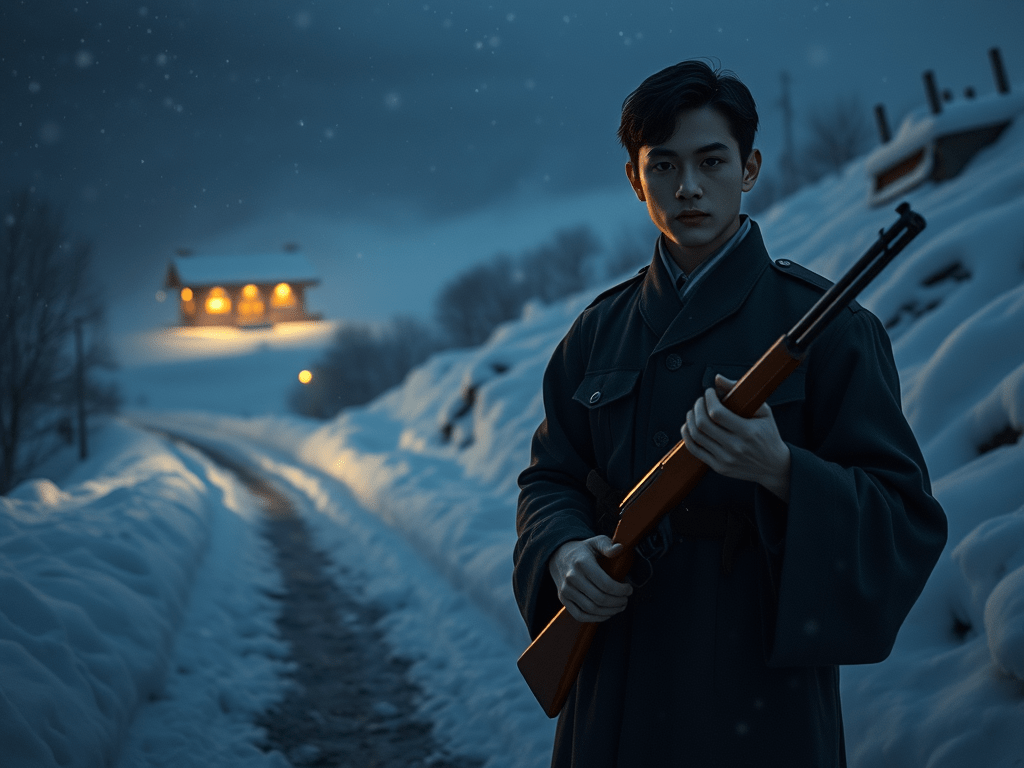
Night of January 23rd: A Fatal Camp
Stranded in a blizzard, the Aomori Team couldn’t pitch tents on snow. They dug 2.5-meter snow trenches for shelter, but untrained in snow camping, they hit no soil—just snow that blocked wind but trapped cold. Forty men crammed into a six-tatami space, freezing at -12°C to -13°C (later dropping to -20°C). The Hirosaki Team, trained for this, dug 4-meter trenches, reaching bearable warmth.
Frostbite numbed fingers; no one could write, leaving records to survivors’ memories. At 9:00 PM, the sled crew arrived, cooking on snow. Fires sank as snow melted, pots tipped, and half-cooked rice was a rare prize by 1:00 AM. Exhausted men fought sleep—fatal in such cold. By 2:30 AM, Major Yamaguchi ordered a retreat, but an hour later, they were lost again in Narusawa’s ravine, compasses frozen useless. They lugged heavy gear, including a massive copper pot, as winds hit 29 m/s and a neared -40°C cold snap— the lowest recorded temperature in Japan.
January 24th: Death’s March Begins
A sergeant claimed he knew the way to Tashiro Shinyu, so Yamaguchi pivoted again. Escaping the ravine, they hit a blinding blizzard. Aomori city recorded -12.3°C, but at 700m on Hakkoda, it was worse. Frostbitten men collapsed, medics froze aiding them, and a quarter of the 210 were lost or down within hours. After 14.5 grueling hours, they’d moved just 700 meters to “Narusawa Second Camp.” With no shovels or strength, they stomped snow into circles, the worst-off in the center, singing to stay awake. Many froze into “ice pillars,” buried by snow. By 9:00 PM, a third were dead, a third crippled, and a third barely functional.
Meanwhile, the Hirosaki Team woke at 6:30 AM, roped together and following guides. Despite numbness, they hit 930m Inuboesaka by 10:00 AM and reached Torai by 6:30 PM.
January 25th: Survival and Despair
The Hirosaki Team moved from Torai to Sanbongi, leaving an injured officer with villagers for a train back to Hirosaki. At 3:00 AM, the Aomori Team, mistaking a lull in the storm for dawn, marched in darkness—only to get lost on a cliff-ringed hill. Captain Kaminari despaired, “Heaven has abandoned us.” Men went mad, wandering into snow that swallowed them like quicksand. Captain Kuraishi recalled “thirty fell like a screen.”
Back at camp, Yamaguchi fainted; survivors used dead men’s gear to warm him. At 7:00 AM, Kaminari and Kuraishi led 12 volunteers to Tamogino for help. By 10:30 AM, they found a path, and Yamaguchi awoke. At 3:00 PM, 71 survivors limped past Umanoseba, but that night’s storm blurred their minds, and deaths mounted.
January 26th: A Flicker of Hope
The Hirosaki Team trekked from Sanbongi to Masuzawa, noting 3-meter icicles by a cliff, arriving at 2:20 PM. Meanwhile, at 1:00 AM, the Aomori Team’s roll call showed just 30 survivors. As dawn revealed Mutsu Bay, a blizzard struck again.
With Major Yamaguchi unconscious, Captains Kaminari and Kuraishi split the group—half left, half right—to hedge their bets. Kaminari’s left path was correct but unconfirmable in the storm.
Exhausted, he ordered Corporal Goto to go on without him. At 10:00 AM, the 5th Regiment’s search team found Goto half-dead—the first Aomori survivor rescued. Kaminari’s body lay 100 meters away. Kuraishi’s group, trapped by a frozen waterfall, huddled in a hollow; their scouts never returned.
January 27th: Hirosaki’s Grit, Aomori’s Cry
The Hirosaki Team reached Hakkoda’s foothills. Facing treacherous terrain, Captain Fukushima hired seven sturdy villagers as guides, rotating pairs to shovel snow.
Near Tashiro, even the guides lost their way, but Fukushima pressed on. At 8:00 PM, they dug a snow trench under a tree, using prepped candles and emergency food—unlike Aomori’s frozen rations.
Departing at 4:00 AM, they hit Tashiro’s shepherd hut by 6:00 AM (-10°C), resting in shifts. That night, the 5th Regiment’s Colonel Tsugawa, stunned by Goto’s report, set up a rescue base in Tamogino
January 28th: Through the Storm
At 8:00 AM, the Hirosaki Team left the hut for Tamogino. Steps averaged 65cm but took 25 seconds each. By 1:05 PM, they crossed Narusawa—Aomori’s doom site—guided safely past Umanoseba.
A 25 m/s blizzard hit, forcing a night march; stopping meant death. Frostbite and delirium crept in, but by 11:55 PM, as the storm eased, they neared Tamogino, arriving at a civilian house at 2:00 AM.
January 29th: Rescue Begins
The Hirosaki Team left at 4:20 AM, reaching Aomori by 7:00 AM. They met the 5th Regiment’s search team, led by Major Kimura, who noted Fukushima’s mention of two frozen soldiers—oddly absent from Hirosaki records. That day, To-o Nippo published a special edition on the disaster. On January 30th, the Hirosaki Team took a flat route from Aomori to Namioka.
Hakkoda’s Last Echoes: A Frozen Legacy
The Hirosaki Team returned to their 31st Regiment base, greeted warmly by a public aware of Aomori’s fate. That day, the search team found nine Aomori survivors, including Yamaguchi—his frostbitten legs hacked free with a hatchet—and Kuraishi, whose liver disease mysteriously healed without food. Emperor Meiji sent condolence funds and aides to Aomori, while the Army Ministry launched an investigation.
On February 2nd, 1902, an imperial aide inspected Hakkoda, concluding the disaster was an act of nature—blizzard and terrain so brutal even a prepared team might perish. The 199 deaths were thus ruled “martyrs,” not mere accident victims. That day, Major Yamaguchi, rescued but ravaged by frostbite, died of heart failure in Aomori’s army hospital, escaping the inquiry he’d have faced.
Body recovery dragged into May, with the 5th and 31st Regiments, artillery, engineers, and even Ainu from Hokkaido joining the search. The last was found on May 28th. In 1971, Nitta Jiro’s novel Hakkoda: Death’s Wander—and its 1977 film—reimagined the tale, though not without liberties (e.g., Yamaguchi’s fictional suicide versus his real, frostbite-crippled end).
Captain Fukushima’s foresight shone post-Hakkoda. In 1904, he penned a prize-winning paper on winter combat for the Russo-Japanese War, but died at 38 in 1905’s Heigoutai battle. Half his Hirosaki Team fell in that war, as did Aomori survivor Captain Kuraishi.
 True TAIWAN Horror story
Leave a comment